How to Choose a Seattle Video Production Company
Yes And Video Corporate video Behind-the-scenes
Hiring a Seattle video production company is one of those decisions that looks simple from the outside and gets complicated fast once you start making calls. Everyone has a slick reel. Everyone says they tell stories. So how do you tell the difference between a team that will make your project easier and one that will make it a headache?
I've run Yes And Video here in Seattle since 2011. We do corporate films, interview series, aerial work, product videos, and brand videos for companies like Amazon, AWS, T-Mobile, Brooks Running, and Tableau. Over 15 years I've sat on both sides of this: pitching the work, and watching clients try to figure out who to trust. This guide is the advice I'd give a friend who asked me how to pick, even if that friend ends up hiring someone else.
Start with the work, not the website
A polished website tells you a company can afford a good web designer. The portfolio tells you whether they can actually shoot and edit. Watch three or four full pieces, not just the sizzle reel, and pay attention to the boring stuff:
Is the interview audio clean, or is there a hum under the voices? Do the interviews feel like real people talking, or like hostages reading a script? Is the color consistent from shot to shot? Does the pacing hold your attention, or are you checking the timeline?
The biggest red flag is a reel that's all flashy drone shots and slow-motion b-roll with no story underneath. Anyone can buy a drone. The hard part and the part that actually sells your product or moves your audience is structuring a narrative and pulling a genuine moment out of a nervous executive on camera. If you can't find a single full piece on their site, ask for one before you go further.
Crew size matters more than you'd think — usually in the other direction
Here's something most Seattle video production companies won't tell you, because their model depends on you not knowing it: a bigger crew is not a better crew. It's just a more expensive one.
There's a persistent myth that a serious video shoot needs a small army — a director, a separate DP, a gaffer, a grip, a sound person, two PAs. For a Super Bowl spot, sure. For the corporate video, brand film, or testimonial series that most Seattle businesses actually need, a large crew mostly means more people standing around, more logistics to coordinate, more disruption to your office, and a bigger invoice.
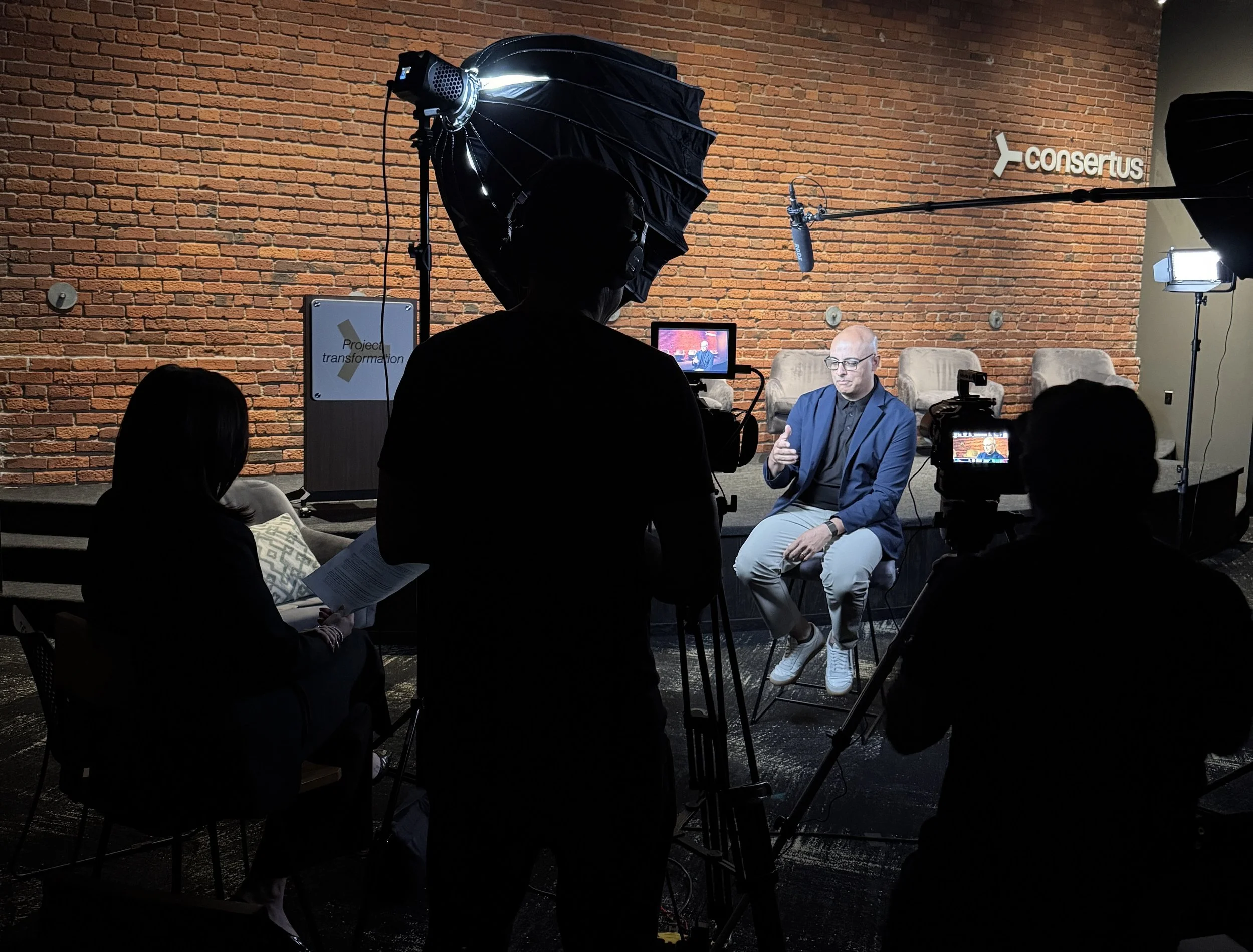
We run lean on purpose. It’s usually two or three people, all senior. The person who scoped your project is the person behind the camera and the person cutting the edit. Nothing gets lost in translation between a sales rep who made promises and a crew who never heard them. Shoots are calmer, your team is less distracted, and you're not paying for overhead you don't need. When a project genuinely calls for more hands, we bring them in but we don't pad the call sheet to look impressive.
When you're evaluating any company, ask them to walk you through who'll actually be on-site for your shoot and what each person does. If they can't give you a straight answer, or if the crew is twice the size of what the project seems to need, ask why.
What Seattle video production actually costs
Nobody likes the "it depends" answer, but pricing genuinely depends on scope, so let me give you the real ranges instead.
A straightforward one-day project — think a couple of interviews plus supporting b-roll, edited into a single 2–3 minute video — typically lands somewhere in the low-to-mid four figures for a lean, experienced Seattle crew. A more produced brand film with scripting, multiple locations, custom motion graphics, and several days of shooting climbs into the tens of thousands. Short-form social clips or a batch of talking-head videos usually cost less per finished minute because you're shooting several at once.
What actually drives the number: shoot days, crew size, how much post-production and motion design the edit needs, licensed music, and whether you need extras like drone footage or a second location. Be skeptical of any quote dramatically below market — it usually means corners get cut somewhere you'll notice later, or the "quote" balloons once revisions start.
The most useful thing you can do is walk into conversations with a real budget range. A good production company will tell you honestly what's achievable at your number and where the trade-offs are, instead of nodding along and surprising you later.
Pin down licensing, revisions, and the contract before you sign
This is where projects quietly go wrong, and it's almost always in the fine print nobody read.
Ask who owns the final footage and the raw files. Ask how many rounds of revisions are included and what a change costs after that. Ask whether the music is properly licensed — using an unlicensed track can get your video pulled off LinkedIn or YouTube, and you'd be surprised how often corners get cut here. Ask what the timeline looks like from wrap to final delivery.
None of these questions are adversarial. A company that does this for a living will have clear answers and probably a contract that spells it all out. If the answers are vague or the response is "don't worry about it," that vagueness is the warning.
Local knowledge is underrated
You can fly a crew in from anywhere, but a Seattle-based team saves you real money and real headaches. There's no travel or per diem padding the budget. We already know the good locations, how the light behaves in the Pacific Northwest (which matters more than you'd think when half the year is overcast), and how to plan a shoot around Seattle weather instead of praying against it.
There's also the logistics knowledge that only comes from working here. Shooting in SODO, South Lake Union, or Pioneer Square each comes with its own parking, permitting, and access quirks. A local crew has navigated all of it before and won't burn your shoot day figuring it out on the fly.
A quick checklist before you decide
Before you sign with any Seattle video production company, make sure you can answer yes to these:
You've watched full pieces of their work, not just the reel, and the storytelling holds up.
You know exactly who will be on your shoot and what they do.
You've discussed a real budget range and understand what drives the cost.
You're clear on footage ownership, revision rounds, music licensing, and timeline.
They know Seattle from locations, permits, and how to shoot in our light and weather.
If a company checks those boxes, you're in good hands, whether that's us or someone else.
Frequently asked questions
How much does video production cost in Seattle? A simple one-day interview-and-b-roll video from a lean, experienced crew typically runs in the low-to-mid four figures, while fully produced brand films with scripting and multiple shoot days run into the tens of thousands. Scope, crew size, and post-production drive the number more than anything else.
Do I need a big production crew for a corporate video? Usually not. Most corporate videos, brand films, and testimonial shoots are handled better by a small, senior crew of two or three people — it's less disruptive, less expensive, and nothing gets lost between the person who scoped the job and the person shooting it.
Should I hire a local Seattle video company or bring one in? Local almost always makes sense for Seattle projects. You avoid travel and per diem costs, and a local crew already knows the best locations, how to work with Pacific Northwest light and weather, and the permitting quirks of neighborhoods like SODO, South Lake Union, and Pioneer Square.
What should I look for in a video production portfolio? Watch full pieces rather than the sizzle reel. Check that interview audio is clean, the story holds your attention, the color is consistent, and real moments come through on camera, not just flashy drone shots with no narrative behind them.
Let's talk about your project
If you're weighing a corporate video, brand film, or interview series in the Seattle area, I'm happy to talk it through, even if you're still just gathering quotes. Tell me what you're trying to make and roughly what you want to spend, and I'll give you a straight answer about what's achievable.
Let’s chat and let's figure out the right approach for your project.
Check out our related blog post: The Best Time of Year to Shoot Video in Seattle