How to Make Executives Shine on Camera: Six Rules I Learned Doing Improv
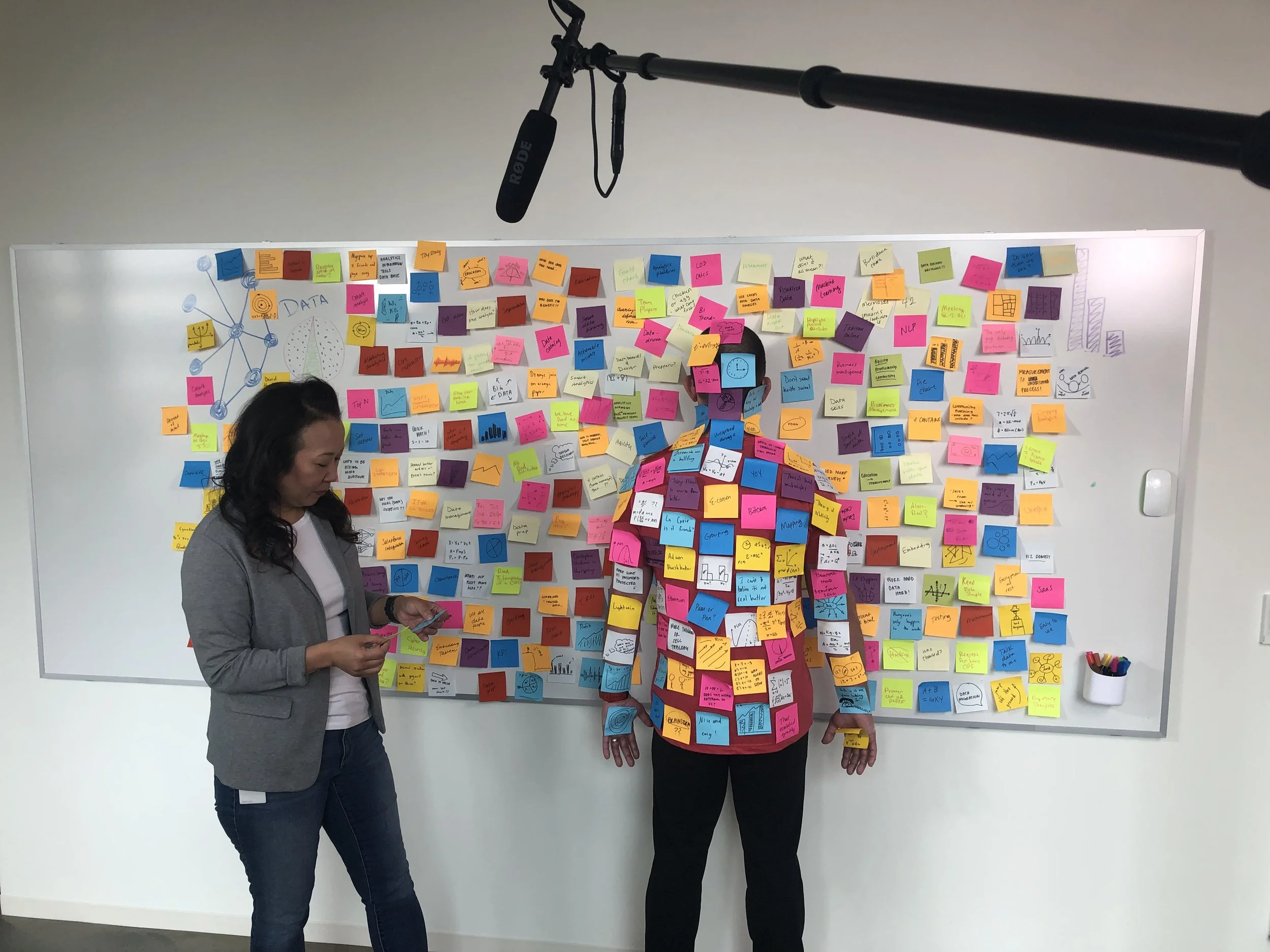
Behind the Scenes at Tableau Video Shoot
What fifteen years of improv taught me about making leaders look like themselves on video.
My company is named after a rule from improv comedy. Most people don't know that.
"Yes, and" is the first thing you learn on an improv stage. Whatever your scene partner hands you, you accept it and build on it. You never shut them down. The scene dies the second someone says "no."
I spent years on stages in Los Angeles and New York before I ever picked up a camera for a living here in Seattle. When I started Yes And Video back in 2011, I figured the name was half a joke. Fifteen years later, I think it's the most honest thing about how we work. Nearly every rule I learned doing improv turned out to be a rule about making good video, especially the kind where a nervous executive has to look like a leader on camera.
Here are the ones I come back to on every shoot.
Yes, and
On stage, "yes, and" keeps the scene alive. On set, it keeps the room from feeling stuck.
A client says, "I know this wasn't in the plan, but what if the CEO walks in from over there?" The answer is yes, and here's how we make it look intentional. Someone flubs a line six takes in and gets embarrassed. Yes, and that's exactly why we shoot extra, let's go again. The location falls through the morning of. Yes, and I already have a backup two blocks away.
Nervous people freeze up, and nothing on camera looks worse than someone who feels trapped. So we keep it loose. We say yes. We build on whatever the day hands us.
Make your partner look good
There's a rule in improv that quietly runs every good video set: make your partner look good.
On stage it means your job isn't to be the funny one. It's to set up the other person so they get the laugh. The best improvisers are almost invisible. You leave thinking everyone was brilliant, and you can't quite say why.
Same thing on a shoot. When we film an executive, nobody in the room should be thinking about us. Not the cameras, not the lights, not the person quietly adjusting a flag off to the side. Every one of those choices exists for one reason: to make the leader on camera look like the leader they already are.
That means the flattering angle, not the clever one. The pause where they gather their thought, left in instead of cut out. The version of the script that sounds like them, not like us. You're not the star. You were never supposed to be.
Don't watch yourself
This one sounds impossible the first time you hear it: don't watch yourself.
The second you step outside the scene to check how you're doing, you're done. You start managing your face. You get in your head about whether that last line landed. And the audience feels it instantly, because you've stopped being present and started performing.
Executives do this constantly on camera, and it's completely human. They hear their own voice, they clock that their hands feel weird, they wonder if they should smile more. Every one of those little check-ins pulls them a step further out of what they're actually trying to say.
So a lot of what we do on set has nothing to do with cameras. We don't show them the monitor between takes. We keep the conversation going so they forget the lens is there. We ask them a question they actually care about and just happen to be rolling when they answer it. The best take of the day is almost always the one where they stopped trying to be good and just talked.
There are no mistakes, only gifts
In improv, the thing that goes wrong is usually the thing that makes the scene. A slip of the tongue, an unexpected entrance, a prop that breaks. You don't apologize for it. You treat it as a gift and use it.
Video works the same way, if you let it. The dog that wanders into frame. The line someone flubs into something funnier than the script. The light that shifts halfway through the afternoon and turns an ordinary shot into the best one of the day. A crew that's panicking will cut all of that out. A crew that's paying attention will build the whole piece around it.
The moments you couldn't have planned are usually the ones people remember. Our job is to stay loose enough to catch them.
Be specific
Vague scenes are boring. "We're two guys in a place doing a thing" goes nowhere. The scenes that fly are built from one concrete detail that everyone can grab onto.
Briefs are no different. "We want something professional and dynamic that really pops" tells me nothing. One specific detail beats ten adjectives every time. Who is this actually for? What's the one thing they should feel? What's the single sentence you'd be thrilled to hear a viewer repeat afterward?
The more specific we get before the camera rolls, the less we're guessing on the day. Clear message in, clear message out. That's most of the job right there.
Listen
The best improvisers barely talk. They listen. They're so tuned in to their partner that the next line feels obvious, because they actually heard the one before it.
The best directors I know are the same way. They're not filling the room with instructions. They're watching, reading how a person is doing, noticing the moment someone tightens up or finally relaxes. Half of directing an executive is knowing when to say nothing at all and just let them find it.
A camera is a very different room than a boardroom. If you're not listening closely, you'll miss the exact second someone stops fighting the format and starts sounding like themselves. That's the take. You only catch it if you're paying attention.
The whole job, really
Strip away the gear and the lighting and the scheduling, and this is what's left: get the leader out of their own way so what they're saying actually sticks.
That's not a technical problem. It's a human one. And it turns out a bunch of improvisers figured most of it out a long time ago, on stages with no cameras at all.
The name was half a joke when I started. Now I think it's the truest thing about how we work. We say yes. We make you look good. And we build something out of whatever the day gives us.
If you've got an executive, a story, or a message that needs to land on camera, that's exactly the kind of thing we love to build. We're based in Seattle and we'd be glad to talk it through.